Journal · Doors & finishes
Shaker or slab? How to pick a cabinet door style
The door style sets the tone of the whole kitchen. What separates Shaker from flat slab, which suits your house, and how hardware changes either one.
nxios design · September 8, 2026
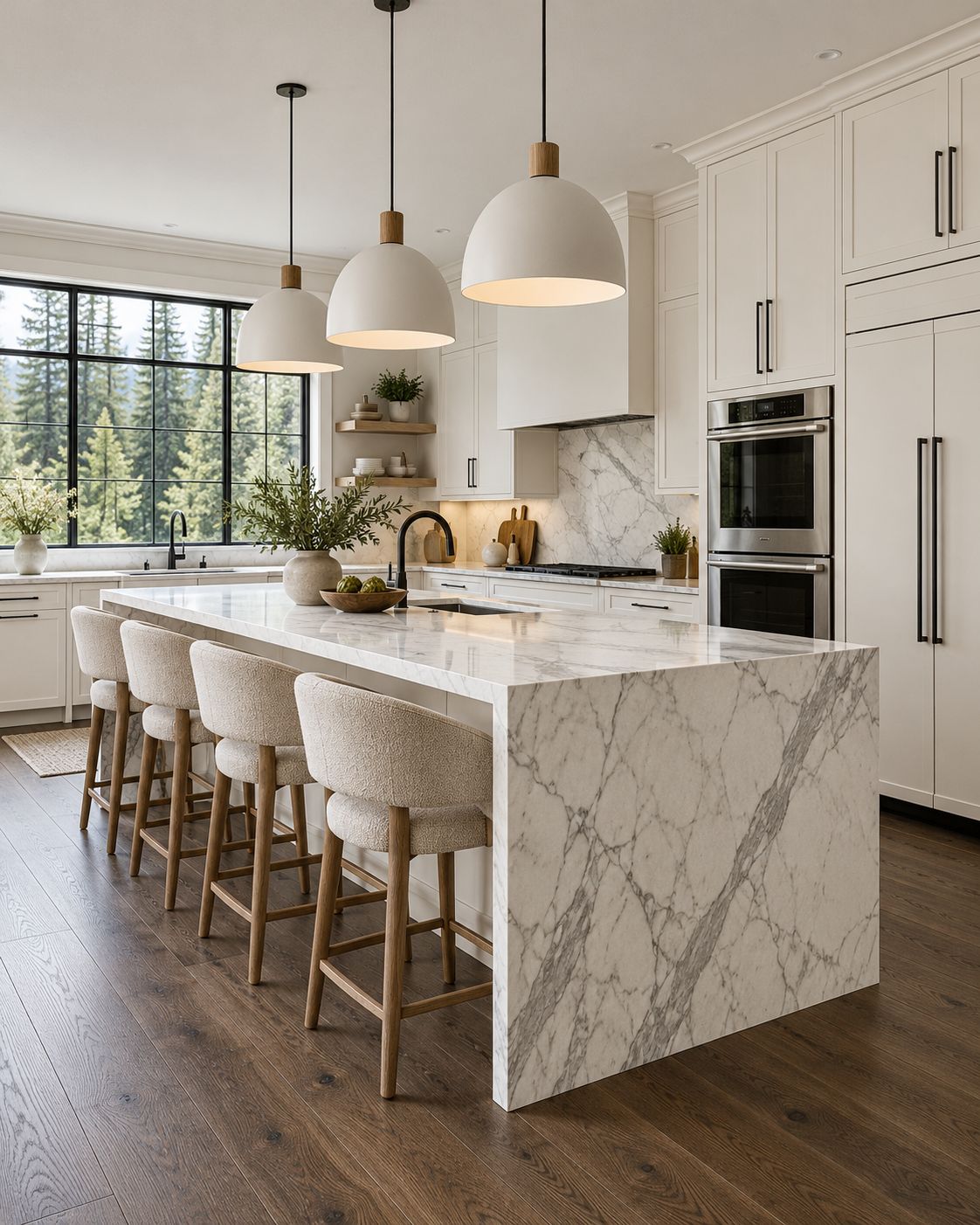
Of all the decisions in a kitchen, the cabinet door is the one you see the most. It covers more of the room than the counters, the floor or the backsplash. Most kitchens today use one of two doors: the framed Shaker or the flat slab. Here is how to choose.
The Shaker door
A Shaker door is a frame of four pieces, two vertical stiles and two horizontal rails, around a flat recessed panel. It takes its name from the Shaker communities of the 1800s, who valued plain, useful furniture, and it has been the most popular cabinet door in America for years.
Why people choose it: it suits almost any house, from a farmhouse to a city apartment. The frame adds a little shadow and depth, so even an all-white kitchen has texture. It is forgiving: small dents and wear are less visible than on a flat face.
What to watch: the inside corners of the frame collect a little dust. And the width of the frame changes the feel completely. Classic Shaker uses rails about 2¼ to 3 inches wide and reads traditional. The newer slim Shaker uses rails about an inch wide and looks crisp and modern.
The slab door
A slab door is a single flat panel with no frame. It is the door of modern and European kitchens, and the one that lets a material speak for itself: the straight grain of oak or walnut, or a smooth matte color.
Why people choose it: it is the calmest door there is. A wall of slab doors reads as one surface, which makes a small kitchen feel larger and a big one feel architectural. With nothing to catch dust, it is the easiest door to wipe clean.
What to watch: every surface is on show, so the finish matters more. Wood veneers and matte finishes hide fingerprints far better than gloss.
Side by side
| Shaker | Slab | |
|---|---|---|
| Look | Classic, warm, adaptable | Modern, minimal, architectural |
| Best in | Traditional, farmhouse and transitional homes | Modern homes, lofts, small open-plan kitchens |
| Cleaning | Wipe the frame corners now and then | One wipe, nothing to catch |
| Shows wear | Less | More, in gloss finishes |
| Hardware | Knobs, cup pulls or short bar pulls | Long bar pulls, edge pulls or none |
Hardware changes everything
The same door can look completely different with different hardware:
- Knobs and cup pulls on a Shaker door read as traditional or farmhouse.
- Long bar pulls on a slim Shaker or slab door read as modern. Mount them vertically on doors and horizontally on drawers.
- Brass warms up white, navy and green. Matte black sharpens white and oak. Stainless disappears.
A simple rule: pick one hardware family for the whole kitchen, and vary only the length.
Mixing the two
You don't have to choose just one. A popular combination is Shaker on the perimeter and slab on the island, or slab cabinets with a few Shaker glass-front uppers. Keep the color or the wood consistent so the two styles look intentional.
Try them on your own room
The quickest way to decide is to see both on your own layout. Open the designer, switch door styles and compare the wall drawings and the 3D view. Any cabinet can also take a second door style from the same series, if you want to try a two-tone kitchen.
Design this look in Slim White Shaker, or read on: how to choose a cabinet color.