Journal · Doors & finishes
How to choose a cabinet color you will still love in ten years
White, wood, gray, navy or green? A practical way to choose cabinet colors, including when two-tone works and how light, floors and counters change everything.
nxios design · September 1, 2026
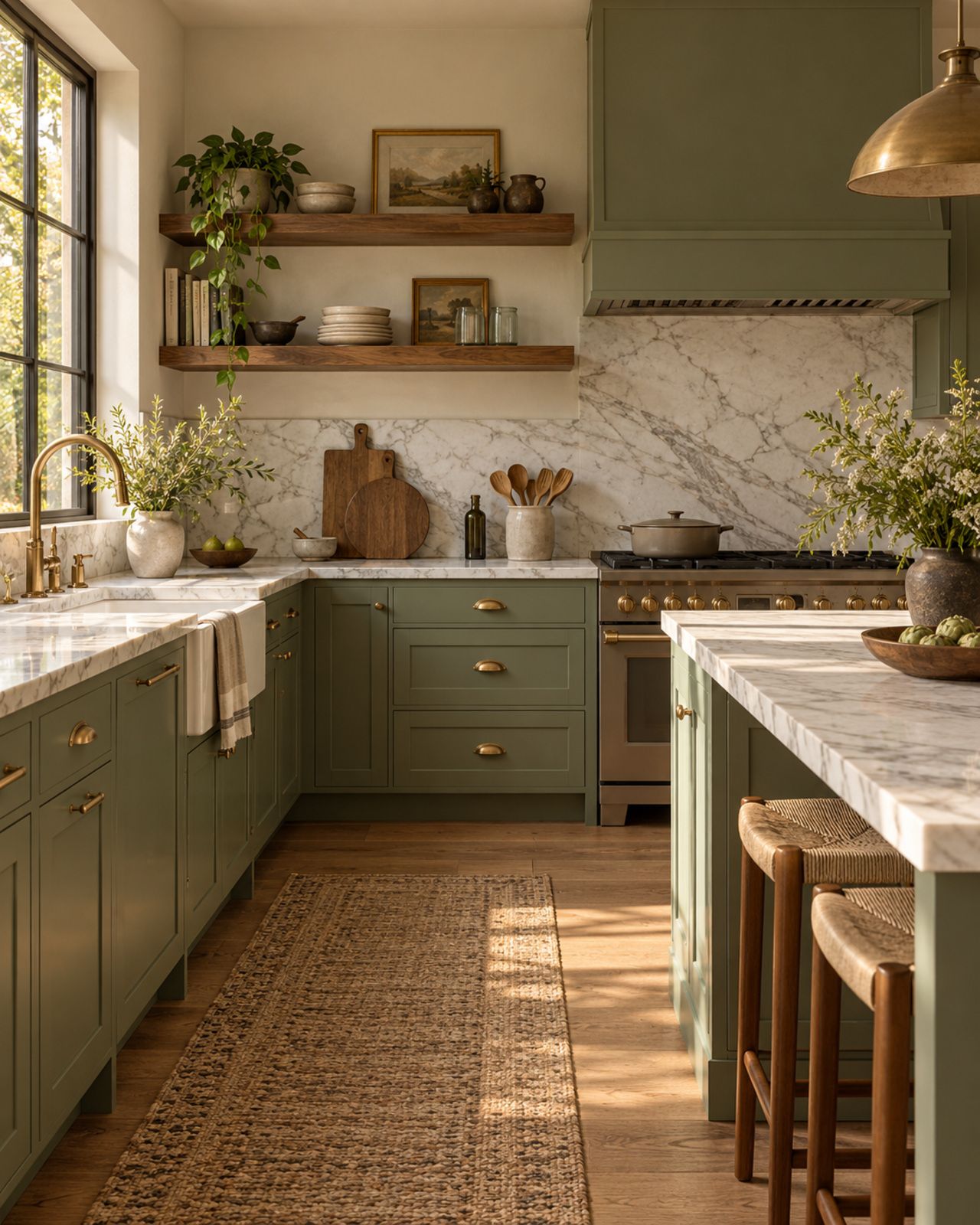
Cabinet color is the decision people agonize over most, and the one most often made from a tiny sample under store lighting. A few simple steps take most of the guesswork out of it.
Start with what you are keeping
Before you look at a single sample, list what is staying: the floor, the windows, a fireplace, the view, the furniture in the next room. Your cabinets have to work with all of it. A honey-toned oak floor will push you toward warm whites and greens; a cool gray tile floor toward crisp whites, grays and navy.
Look at your light
The same white looks different in every room:
- North-facing rooms get cool, even light. Warm whites and wood keep them from feeling cold.
- South-facing rooms get warm, bright light. Almost anything works; deep colors look rich rather than dark.
- Evening light is what you live with. Most bulbs are warm, around 2700K. Check your samples at night too.
The main families
White and off-white
The safest and the most flexible. Pure, cool whites suit modern kitchens with black or steel accents. Warm whites and creams suit wood floors, brass and older houses. If in doubt, go one step warmer than you think.
Natural wood
Oak, walnut and stained finishes are the strongest trend of the moment, and for good reason: they hide wear, warm up a room and go with almost every counter. Light oak feels Scandinavian and airy; walnut and espresso feel tailored and rich.
Gray and greige
Gray is quieter than it was a few years ago. The grays that still look current are warm ones that lean toward beige or green. Gray hides everyday marks well, which makes it a practical choice for busy kitchens.
Navy, green and other deep colors
Deep colors make a kitchen feel like a room rather than an appliance. Navy is the classic, sage and forest green are the colors of the moment, and both look best with brass, warm wood and a white or light stone counter.
Two-tone, done right
Two-tone kitchens mix two colors, and they are a good way to use a bold color without overwhelming the room. The rules that keep it looking intentional:
- Dark below, light above. Darker base cabinets ground the room; lighter wall cabinets keep it open.
- Or color the island. It is the easiest place to try a bold color, and the easiest to change later.
- Two colors, not three. Add wood or metal as the accent instead.
- Repeat each color at least twice in the room, in the stools, a rug or the art, so neither looks like an accident.
In our designer, any cabinet can take a second color from the same series, so you can try a two-tone kitchen on your own layout and see the price change as you go.
Counters and hardware
| Cabinets | Counters that work | Hardware that works |
|---|---|---|
| Warm white | White quartz, soft marble, butcher block | Brass, matte black |
| Natural oak | White quartz, honed marble, concrete | Matte black, stainless |
| Gray | White or light gray quartz | Stainless, matte black |
| Navy | White quartz, marble | Brass, polished nickel |
| Espresso | Light quartz, light granite | Stainless, brass |
Test before you commit
Order or look at samples, and put them where the cabinets will go. Look at them in the morning, at noon and at night, next to your floor and your counter sample. Then live with them for a few days. The color you still like on day three is the one.
Design this look in Dark Blue Shaker, or compare door styles in Shaker or slab.